Backlog Anxiety Is Real, and Here's How Gamers Are Coping With It

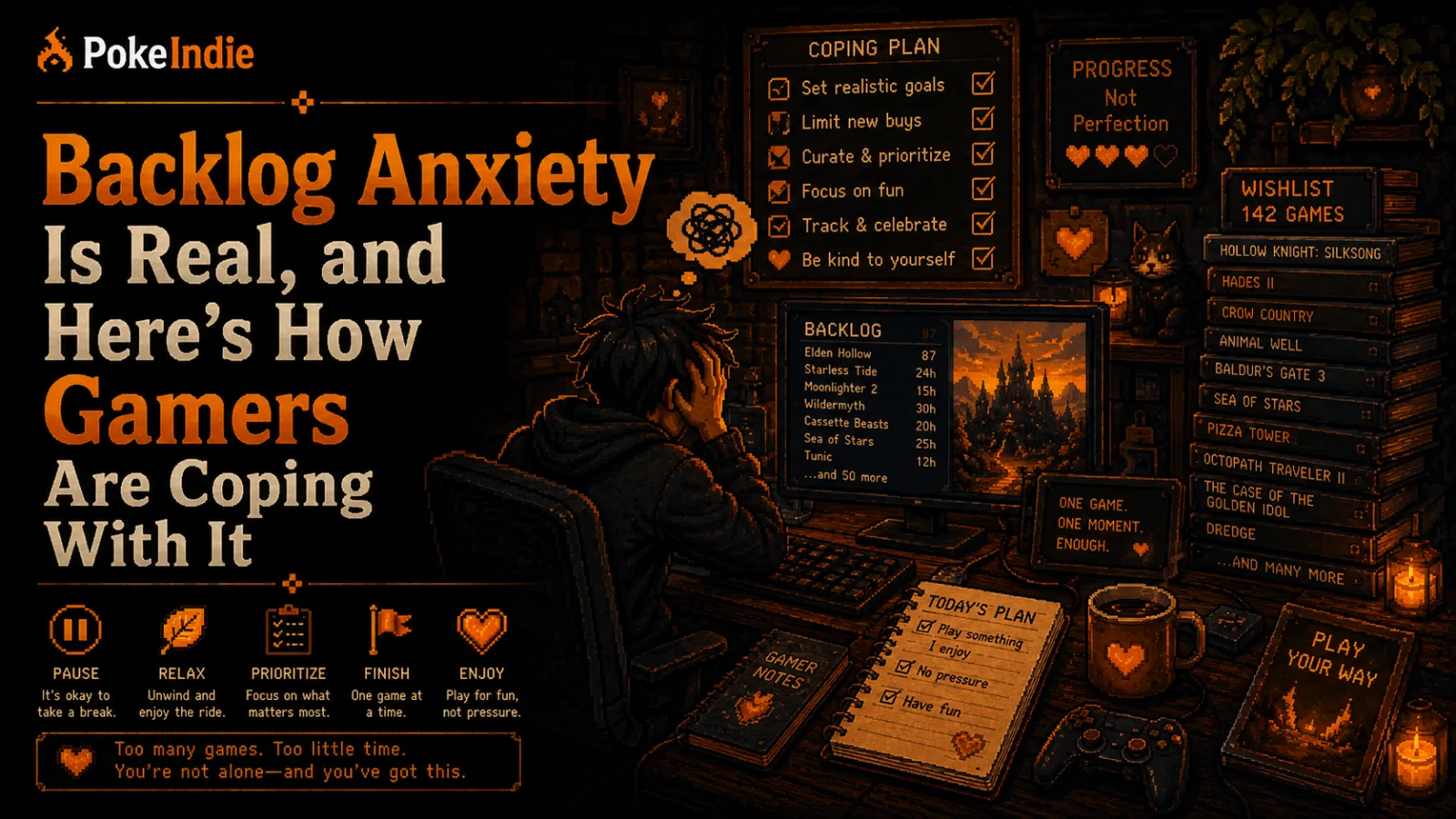
There's a specific kind of dread that comes from opening your library and seeing a hundred games you own but have never touched. It's not guilt exactly, it's closer to a to do list that never shrinks. Gamers have started calling it backlog anxiety, and it's becoming a genuinely common way to talk about a modern gaming habit that used to just be called "having good taste in sales."
It's not just a gaming thing, but gaming makes it visible
Unfinished books, unwatched shows, and unread articles pile up the same way, but a game library puts the count right in front of you every time you open the storefront or launcher. That visibility is exactly why the feeling attaches so strongly to gaming specifically: nobody sees a running tally of every book they've bought and not read, but almost every platform shows you your library size, your unplayed count, or both, whether you asked for that reminder or not.
How the backlog got this big
A few things stacked on top of each other: storewide sales trained everyone to buy on impulse, subscription libraries added dozens of "free" games nobody has to commit to, and bundle sites turned entire genres into a single ten dollar purchase. None of that is bad on its own, cheap access to games is a win for players, but it also means the backlog grows faster than any one person can play through it. The pile isn't a failure of willpower, it's just math.
The completionist trap makes it worse
A lot of backlog anxiety isn't really about the size of the pile, it's about an unspoken rule that a game "counts" only if you finish it. That mindset turns every purchase into a debt instead of an option. Dropping a game at hour three because it's not clicking isn't a failure, it's information, and treating it that way is often the single biggest relief valve available. The backlog doesn't need to hit zero to stop being a source of stress. It just needs to stop being treated like an obligation.
The coping strategies that actually stick
The players who've made peace with their backlog tend to lean on a few habits instead of trying to "beat" the whole list at once.
The shortlist approach. Instead of staring at the full library, pick five games and ignore the rest until those five are done or dropped. A hundred item list is paralyzing. A five item list is a weekend plan.
Backlog burndown challenges. Communities built around clearing a set number of games per month (often organized around a shared spreadsheet or Discord) turn a solo chore into something with accountability and a bit of friendly competition.
"One and done" runs. Not every game needs a full completion. Giving yourself permission to play something for two hours, form an opinion, and move on clears mental space just as effectively as finishing it would.
Leaning on shorter games on purpose. This is where indies quietly do a lot of the work. A tight eight hour roguelike or a three hour narrative game is a much easier backlog item to actually finish than a hundred hour open world release, which is part of why our piece on why roguelikes keep dominating indie charts matters here too: short, replayable loops are backlog friendly by design.
The social side of clearing a backlog
Backlogs feel a lot lighter when they stop being a solo project. Co-op backlog nights, where a group of friends each picks something short from their own pile and reports back, turn a chore into a hangout. Check in group chats where people just post "finished X, starting Y" do something similar without needing everyone to play the same thing. None of this requires a formal club or a spreadsheet, it just requires making the backlog visible to other people instead of something you quietly feel bad about alone. Accountability doesn't have to be strict to work, it just has to exist.
Curation matters more than volume
The instinct when the backlog feels overwhelming is to stop buying games entirely, but that usually isn't the actual fix. The problem is rarely the size of the library, it's the lack of a system for deciding what to play next. Wishlists sorted by mood instead of by purchase date, tags for "short and finishable" versus "long term project," and simply keeping a running shortlist visible somewhere all do more work than cutting spending ever will. A library of five hundred games with a clear next pick is far less stressful than a library of fifty games with no idea where to start.
It's a taste problem now, not a money problem
The interesting shift is that backlog anxiety isn't really about spending too much anymore, plenty of these games came from bundles or subscriptions. It's about attention: too many good options and not enough hours to give each one a fair shot. That's arguably a better problem to have than an empty library, but it's still a real one, and treating it like a manageable habit instead of a moral failing seems to be what actually helps.
If you're a developer trying to earn a spot in an already overloaded backlog, the honest answer is respect the player's time: tight scope, a strong opening hour, and a devlog that sets accurate expectations. Our roundup of devlog habits that get your indie game wishlisted covers exactly that from the other side of the screen.
When the backlog starts feeling like a job, that's the actual problem
The whole point of a backlog is that it's optional. The moment clearing it starts to feel like homework, something has gone sideways, and the fix is almost never "play faster." It's stepping back, picking one thing that sounds genuinely fun right now, and letting the rest of the pile sit exactly where it is. Games don't expire. A hundred unplayed games isn't a debt collector, it's just a very well stocked shelf, and shelves are supposed to be looked at whenever you feel like it, not worked through on a schedule.
Catch more coverage like this in our Gaming News section.