7 Devlog Habits That Actually Get Your Indie Game Wishlisted

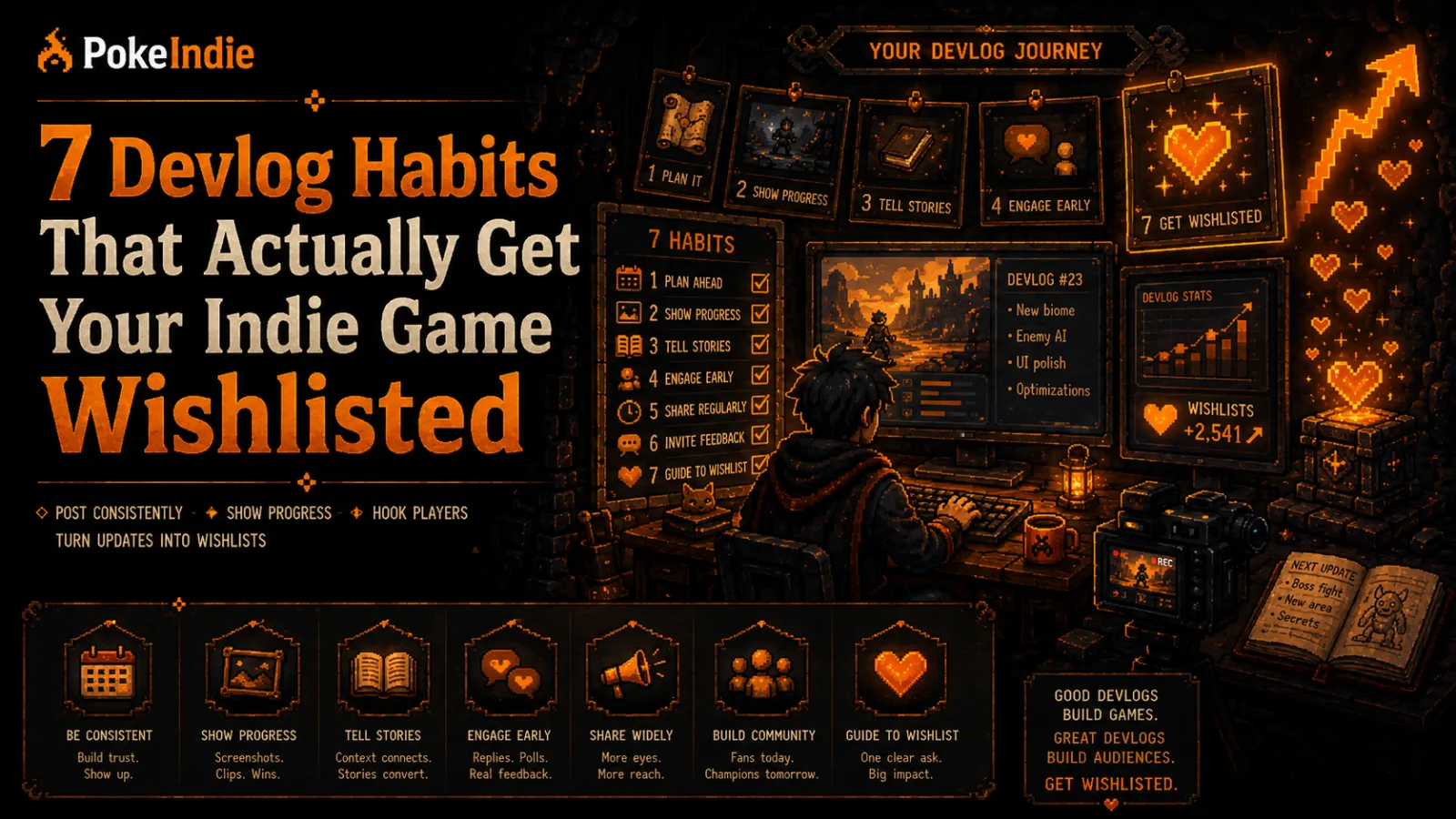
Every indie dev knows they're "supposed" to post devlogs. Far fewer treat it like the actual marketing channel it is. A devlog isn't a diary, it's a pitch you make in public, once a week, for months. Here's what separates the ones that build an audience from the ones that vanish into the timeline.
1. Post progress, not perfection
The instinct is to wait until a system looks polished before showing it off. Resist it. Followers connect with process, not just the finished product; a rough clip of a new mechanic breaking in a funny way gets more genuine engagement than a silent, polished trailer, because it reads as honest instead of as an ad. Save the polished trailer for launch. Save the messy middle for the devlog.
2. Pick a platform mix and actually commit to it
Posting a devlog once and hoping it finds an audience organically doesn't work anymore, the algorithms on every platform reward accounts that show up consistently, not accounts that post once and disappear for a month. That doesn't mean posting everywhere: it means picking two or three platforms that fit your game's audience (a pixel art platformer probably belongs on the same places as a cozy sim doesn't) and posting to them on a rhythm, even when the update is small. A short clip on social media, a longer breakdown on a devlog specific community, and an occasional deeper post on your own site or blog covers most of what an audience actually wants without spreading you across ten channels you can't sustain.
3. Lead with a gif or clip, every single time
A wall of text describing a feature gets scrolled past. A five second gif of the feature in motion stops the scroll. If you only have one rule to follow, make it this one: nothing gets posted without a moving image at the top. Text can explain the "why" underneath it, but the gif does the recruiting.
4. Show the failure states, not just the wins
"Here's a boss fight that's still too easy and here's what we're trying next" builds more trust than "here's our amazing new boss fight." Players who follow along through the failed iterations become invested in the outcome, and invested followers convert into wishlists at a much higher rate than passive scrollers ever do. This also does quiet, practical work for you: showing an early, unbalanced version of a system and then following up a few weeks later with the fixed version gives followers a before and after they can point other people to, which is exactly the kind of clip that gets reshared into communities you'd never reach on your own.
5. Keep a cadence you can actually sustain
A weekly devlog you can maintain for a year beats a daily one you burn out on after three weeks. Pick a schedule (weekly is the sweet spot for most solo devs) and treat it like a deadline, not a suggestion. Consistency is what turns casual viewers into people who check for your next post, which matters far more than any single viral clip. If a week genuinely has nothing worth showing, post the miss: "spent this week fighting a save system bug, no clip this time" still keeps the account alive and honest, and it beats going silent for three weeks and having to explain the gap later.
6. Reply to the people who show up
A devlog that never talks back is a broadcast, not a community. The accounts that build real wishlist momentum are the ones where the dev answers comments, asks followers which of two directions they'd prefer, and occasionally puts a genuinely undecided design question in front of the audience. It costs almost nothing and it turns a passive follower into someone who feels like they have a small stake in the game shipping well, which is a much stickier relationship than "I saw a cool gif once."
7. Point every post somewhere
Every devlog post should end with a clear next step: wishlist the game, join the Discord, follow for the next update. Momentum without a destination is wasted momentum. If a post gets picked up and shared, make sure the people who land on it know exactly what to do next.
Track what's actually working, not what feels good to post
Most devs never look past the like count. Pay closer attention to which specific posts drove wishlist spikes or follower growth, not just which ones got the most reactions, and you'll usually find the two don't line up the way you'd expect. A quiet post showing a fixed bug can outperform a flashy trailer if it happens to land in front of the right community at the right time. Keep a rough log of what you posted and when, next to whatever wishlist or follower numbers you have access to, and after a few months a pattern usually shows up: a format, a topic, or a platform that consistently pulls more weight than the rest. Do more of that, and stop assuming you already know which of your posts are working.
Common mistakes that undo all of the above
A few habits quietly cancel out everything else on this list. Going dark for a month after a strong launch week kills exactly the momentum that week built. Posting only good news trains an audience to tune out, because a feed with no friction reads as marketing copy instead of an honest process. And answering every question about release dates with a vague "soon" erodes trust faster than just saying "no firm date yet, here's what's left to build" ever would. None of these mistakes are dramatic on their own, they just quietly bleed an audience that took months to build.
Devlogs are marketing for games that don't have a marketing budget
None of this requires a publisher or a paid campaign. It requires showing up, being honest about the mess, and pointing people toward a wishlist button. If you're building something with a strong replay loop, our breakdown of why roguelikes keep dominating indie charts is a good look at how genre choice and devlog-friendly design can reinforce each other.
For more dev focused coverage, check out the Development News section.