World of ClaudeCraft Is an Open Source Browser MMO You Can Actually Read the Code For

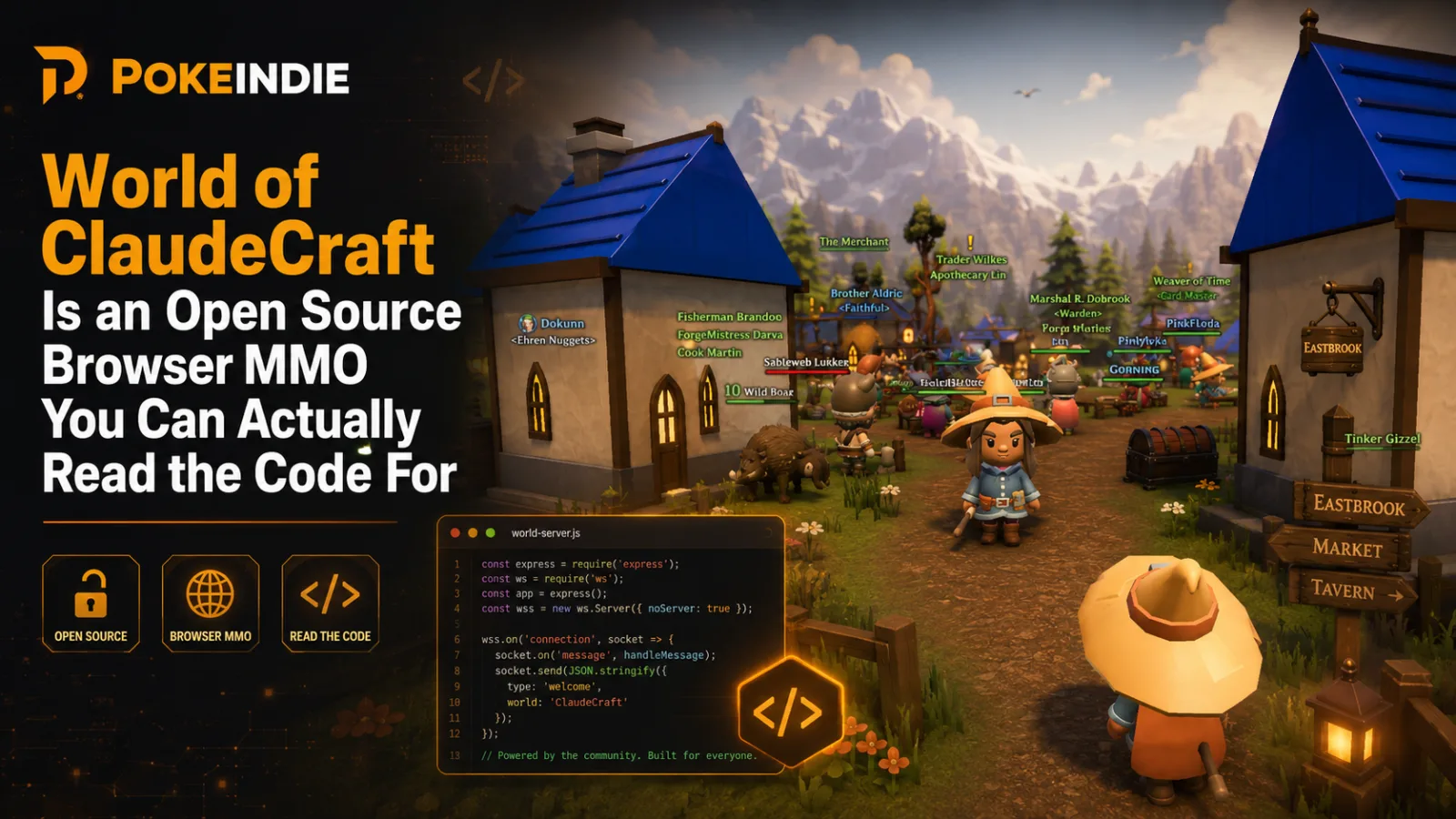
Browser based MMOs have a rough reputation, usually earned by years of low effort clones chasing ad revenue. World of ClaudeCraft (worldofclaudecraft.com) doesn't fit that mold. It's a classic style MMORPG rendered in real time 3D straight in your browser, built around a persistent shared world with classes, dungeons, an arena, and a full social layer, and unlike almost anything else in the genre, its entire codebase is public on GitHub for anyone to read, fork, or learn from.
A classic MMO feature list, not a stripped down one
The game's own description calls it a "classic-style micro-MMO," but the feature set on display is anything but minimal. Character progression runs through a spellbook and a talents system, alongside professions and a dedicated crafting window for turning gathered materials into gear. There's a full quest log with an on-screen quest tracker, a "Book of Deeds" achievement style system, and a calendar for tracking recurring content. Social systems cover guilds and friends, a party frame setup for grouping, and a dungeon finder for queuing into instanced content without manually organizing a group first.
Combat brings the tools raid focused MMO players will recognize immediately: unit frames with health and resource bars, cast bars for both the player and their target, a damage and healing meter with threat tracking, and a full death and resurrection cycle, complete with a "release spirit" ghost state and a choice between resurrecting at your corpse or through an NPC healer. When you die in the game's starting region of Eastbrook Vale, you'll be making that choice in front of an NPC called the Pale Keeper, stationed at a location called Keeper's Toll, small worldbuilding details that show up directly in the game's own interface code.
PvP, a card game, and a seasonal sports minigame
Beyond the core PvE loop, World of ClaudeCraft has a dedicated arena (branded in game as the Ashen Coliseum), a full leaderboard system, and two features you don't often see bolted onto a browser MMO: a card dueling minigame with its own dedicated window, and a competitive event called the Vale Cup with its own indicator, standings, and season structure. There's also a market window for player trading, a bank for storage, a mailbox system (referred to internally as Ravenpost), and an in-game currency called Claudium tied to a dedicated WOC Store, all sitting alongside the usual bags, character sheet, and inspect windows you'd expect from the genre.
Scratching a classic MMO itch without the barrier to entry
The genre World of ClaudeCraft is chasing has a pretty specific fanbase: players who grew up on early 2000s style MMORPGs and still miss the specific texture of that era, the cast bars, the threat meters, the mailbox runs, the dungeon queue anxiety, systems that mostly disappeared from big budget releases chasing a broader audience. Recreating that in a browser tab, with no client download and no account server to wait on, removes the single biggest barrier that's kept most nostalgia driven MMO projects from ever finding an audience beyond the people already deep enough into the genre to install a bespoke launcher.
It runs in a browser, but a downloadable client exists too
The technical pitch is that none of this requires an install. World of ClaudeCraft renders its world in real time 3D using Three.js directly inside the browser tab, and the site's navigation is built around a "Play" button front and center. That said, the same navigation also includes a "Download" option alongside Play, High Scores, Wiki, News, and Login/Register, so players who'd rather run a dedicated client than keep a browser tab open have that choice too. Either way, there's no plugin or launcher to fight with just to get into the world.
Open source, donation funded, and genuinely global
The part of World of ClaudeCraft that matters most for anyone reading a development focused blog is that the whole project is open source, hosted on GitHub under the developer handle levy-street. That's a real, inspectable production codebase for a working browser MMO, not a toy demo, which makes it a rare hands on reference for anyone curious how systems like cast bars, threat meters, or a dungeon finder actually get built. The project takes donations through Ko-fi rather than running on a traditional monetization model, and it's localized into roughly twenty languages and regional locales, from Spanish and French to Japanese, Korean, and Vietnamese, which is a serious localization footprint for a community funded project.
The game also treats its Discord as more than a support channel. Linking a Discord account directly earns points and rank inside the game itself, and the community spreads across Discord, YouTube, X, Instagram, TikTok, and a dedicated subreddit, giving it a genuinely active multi platform presence rather than a single quiet server.
A rare place to actually study MMO architecture
Most of what gets written about MMO development stays theoretical, because the projects big enough to have real answers keep their code locked away. An open source, actively populated MMO flips that. Curious how a threat meter is supposed to reconcile with a damage meter without desyncing, or how a dungeon finder queue should hand off into an instanced group without duplicating players in two places at once? Instead of guessing from a forum post, you can open the relevant file and read exactly how one working implementation handled it. That's a genuinely rare resource, and it pairs well with the kind of build in public habits we covered in our piece on devlog habits that get your indie game wishlisted, except here the entire codebase is the devlog.
Why it's worth a developer's attention
Most open source game projects are either small prototypes or abandoned after a first commit. World of ClaudeCraft is neither: it's a functioning, populated MMO with account systems, bot protection on login, real time combat, and a full UI built out to the level of raid tools and minigames, and you can go read exactly how all of it was put together. Whether you're an indie dev curious about browser based 3D rendering, an MMO fan chasing that classic genre feel without an install, or just someone who appreciates a project that put its code where its pitch is, it's worth a look either as a player or as a repository to clone.
For more coverage on how indie and community built projects actually get made, check out the Development News section.